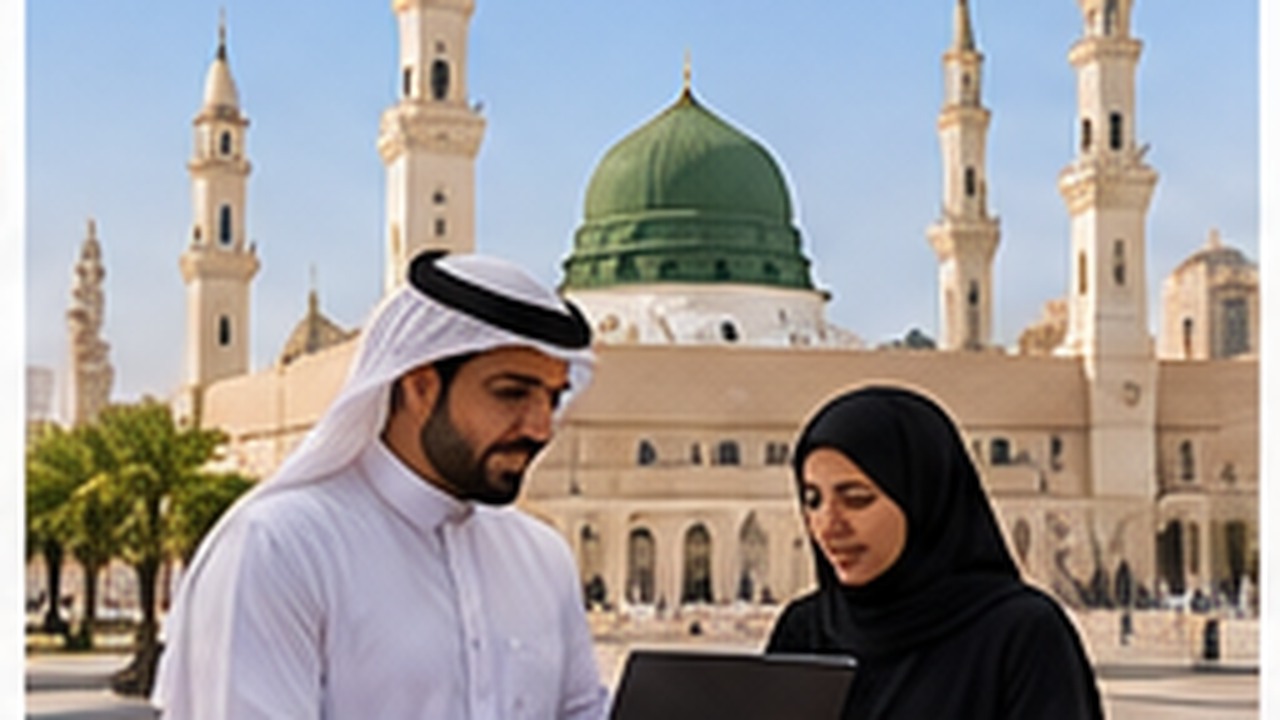
In Mecca, a loan between private individuals should remain an interest-free qard, recorded in writing and ideally secured by a Nafith promissory note, and any offer of credit, pilgrimage package or permit payable upfront to a stranger should be treated as suspect.
An economy paced by the Hajj and Umrah
Mecca, which only Muslims may enter, lives to the rhythm of the pilgrimages. Hotels, restaurants and transport firms hire heavily during the Hajj and Ramadan, then cut staff afterwards. Such seasonal income makes it harder to set a stable repayment schedule.
Seasonal workers and requests for salary advances
Staff at hotels near the Grand Mosque often ask colleagues for advances before the high season. It is better to concentrate repayments in the busiest months and to record them in a contract signed by both parties.
Saudi law as applied in the holy city
Mecca follows the same texts as the rest of the Kingdom: riba (interest) is prohibited, any lending business needs a SAMA licence, and the Civil Transactions Law applies. Our page on private lending in Saudi Arabia sets out the details.
Qard hasan, the benevolent loan held in high regard
In the Islamic tradition so present in Mecca, qard hasan is an act of benevolence: the lender asks only for the capital back. The Quran also recommends putting debts in writing, a principle that matches modern advice on caution.
Nafith notes and the Mecca enforcement court
Even between devout relatives, an electronic Nafith promissory note protects both sides. It fixes the amount owed and, in case of default, allows the creditor to apply to the Mecca enforcement court through an online procedure.
Fake pilgrimage packages and trap loans
Fraudsters offer cheap Hajj packages or fake permits, then a loan to pay for them in exchange for upfront fees. Official bookings go through the Nusuk platform and through agencies approved by the Ministry of Hajj and Umrah.
Pilgrims in difficulty: lend or redirect?
A pilgrim who has lost a wallet sometimes asks a resident for a loan. Repayment from abroad is uncertain; it is often safer to point the person towards their consulate in Jeddah or towards their approved pilgrimage agency.
Students at Umm Al-Qura University
Umm Al-Qura University welcomes Saudi and foreign students who come to study Sharia and the Arabic language. Loans between students for books, accommodation or a ticket home should stay modest and be set down in writing.
Spotting the fraudulent lender who invokes religion
Some fraudsters present themselves as benefactors offering an interest-free halal loan, then demand zakat or registration fees by messaging app before any payment. The typical signs are described in our article on how to recognise a scam lender.
Mecca victims: the reporting channels
A Mecca resident defrauded online files a report through Absher or Kollona Amn, alerts their bank to try to block the transfer and keeps all messages. SAMA Cares then handles complaints against banks and finance companies.
Medina and Mecca: two holy cities, similar risks
Pilgrims often visit both cities in turn, and loan frauds travel from one to the other. Our page devoted to a peer-to-peer loan in Medina details the particular features of the City of the Prophet.
Pilgrimage shops: loans between partners
Souvenir, incense and textile shops around the Haram are often run as family partnerships. A cash advance before the season must be distinguished from a capital contribution and formalised before a licensed lawyer or notary.
How to arrange a peer-to-peer loan in Mecca
- Assess how regular the borrower's income is, allowing for the slack months outside the pilgrimage seasons.
- Draw up a qard contract in Arabic stating the amount in riyals, the absence of interest and the schedule.
- Concentrate instalments on the Hajj, Ramadan and the busiest Umrah periods.
- Issue a promissory note on Nafith and have the borrower approve it with their Nafath login.
- Pay the sum by bank transfer and keep the proof in a dated file.
- Ignore any package or loan offer payable upfront outside Nusuk and approved agencies.
Indicative orders of magnitude in Mecca
| Item | Indicative amount | Key point |
|---|---|---|
| Interest on a qard hasan | 0 SAR | Only the capital is repaid |
| Nafith promissory note | Low, indicative | Fee scale published by the platform |
| Lawyer's advice | Varies by firm | Recommended for business partnerships |
| Fake Hajj package with a loan | Several thousand SAR lost | Book only through official channels |
| Zakat fees demanded by a fake lender | Total loss likely | No legitimate lender asks for them |
Documents to gather in Mecca
- National identity card or iqama
- Seasonal employment contract or employer's certificate
- Qard contract signed in Arabic
- Nafith promissory note
- Schedule adapted to the pilgrimage seasons
- Bank proof of payment
Common mistakes around the Haram
- Paying upfront fees for a loan meant to fund a Hajj package offered outside the official channels.
- Lending to a passing pilgrim without a verified identity or an address in their country of residence.
- Setting fixed monthly payments for a seasonal worker whose income collapses outside the pilgrimage periods.
- Paying zakat or registration fees to a lender who poses as a religious benefactor.
- Writing nothing down between partners in a shop near the Haram and leaving the debt without proof.
Questions about private lending in the holy city
Does an interest-free loan in Mecca have to be in writing?
No particular form is required for a small loan, but writing it down is strongly advised, in line with Islamic tradition and contract law. A signed contract and a Nafith note prevent misunderstandings and make recovery easier.
How can I finance a pilgrimage without falling for a loan scam?
Book only through the Nusuk platform or an agency approved by the Ministry of Hajj and Umrah. If a relative lends you the money, draw up an interest-free contract and pay the agency directly, never an unknown intermediary.
Can a seasonal worker borrow from their employer?
A salary advance granted by the employer is common. It should be set out in writing with the terms for deductions from pay, in line with Saudi labour law. Check with the Ministry of Human Resources if in doubt.
What can I do if a pilgrim does not repay after leaving?
Recovery abroad often requires a local lawyer and a lengthy procedure. Keep the evidence of the loan and contact the consulate of the country concerned, which can sometimes act as an intermediary, with no guarantee of success.