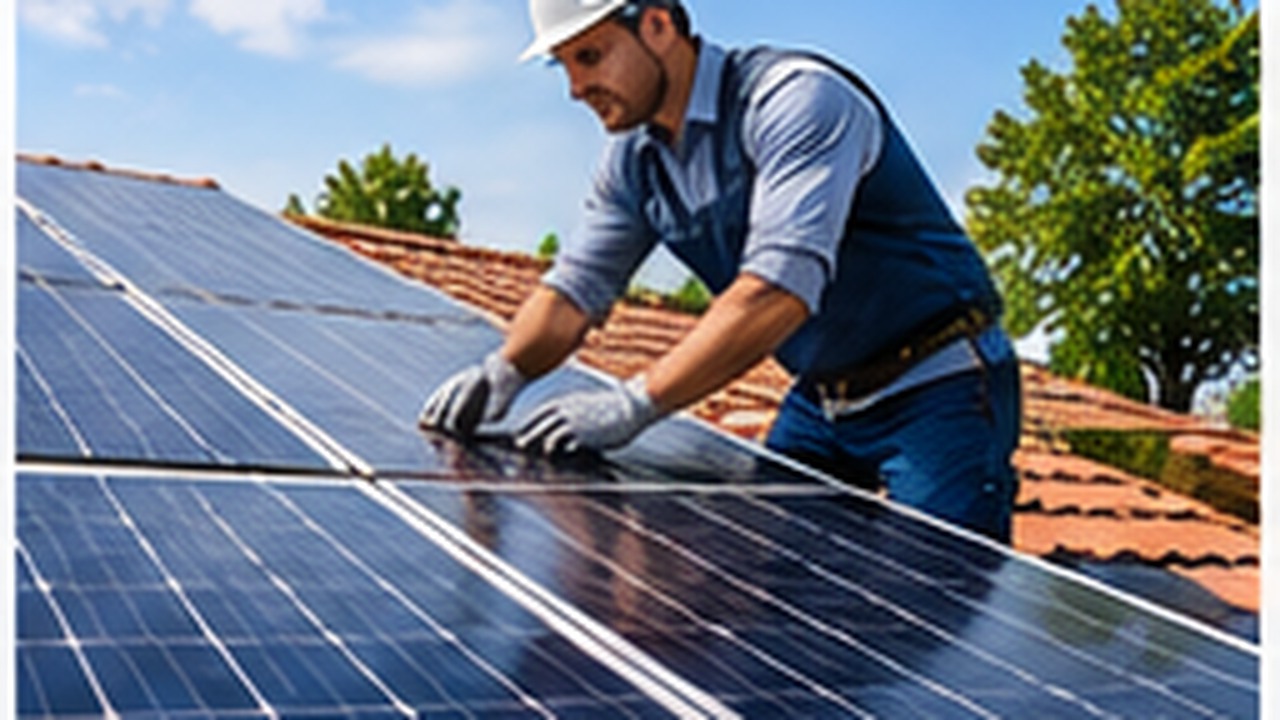
Paying for photovoltaic panels with a loan from someone close is legal in France, provided you sign a written contract, choose an RGE-certified installer, check the public grants and stay wary of credit offers tied to doorstep or phone selling.
Self-consumption, resale and the budget to cover
A home installation can be used to consume your own electricity, to sell the surplus under a feed-in purchase contract, or both. The amount to borrow depends on the peak kilowatt capacity, the inverter, any battery and the connection to the Enedis grid.
Family loan or the seller's linked credit
Installers often offer a linked credit, tied to the sales contract by the French Consumer Code. A loan from a parent or friend avoids that link but also its protection: if the sale is cancelled, the family loan is still owed.
The RGE label is the key to grants
Public grants and the self-consumption bonus in practice require an RGE-qualified installer. Before lending or borrowing, check the qualification in the official France Rénov' directory and ask for the company's ten-year liability insurance certificate.
MaPrimeRénov' and photovoltaics
MaPrimeRénov' does not fund photovoltaic panels that generate electricity, unlike some solar thermal equipment such as a solar water heater. A seller who claims otherwise to justify a larger loan should immediately make you suspicious of the whole offer.
Prior planning declaration at the town hall
Fitting panels on a roof changes the building's appearance and in principle requires a prior declaration at the town hall, or even the opinion of the Architecte des Bâtiments de France in a protected area. Release the loan only after this approval.
Cold calling banned for energy renovation
Since the law of 24 July 2020, cold calling has been banned for energy renovation work, except under an existing contract. A call offering panels with free private financing is therefore an illegal practice to report on Signal Conso.
A loan contract based on expected savings
Between individuals, a schedule matched to bill savings and resale income seems logical, but those gains vary with sunshine and tariffs. The contract should set fixed monthly payments, independent of the panels' actual output.
Co-ownership buildings and jointly owned houses
In a block of flats, installing panels on the shared roof requires a vote at the co-owners' general meeting. For a house held in joint ownership, the other co-owners must agree, and without these approvals the loan funds a project likely to be blocked.
Self-financing solar scams
Some sellers promise an installation paid back by selling electricity, then get you to sign a large credit with a third-party lender. Our page on the loan scam on social media describes the adverts used as bait.
Cooling-off period and disputes with the installer
For a contract signed at home, the law grants a fourteen-day withdrawal period. In a dispute, you can refer the matter to the consumer mediator appointed by the installer, and reporting a loan scam protects other households.
Tax on the loan and on electricity sales
Above 5,000 euros, the borrower declares the family loan on form 2062. Income from selling electricity follows its own tax regime, which you should check with the tax office according to the installed capacity.
Crowdfunding for renewable energy projects
Platforms licensed as PSFP by the AMF invite individuals to lend to local solar farm projects. This risky investment does not pay for a private roof: you invest in a project company and may lose your capital.
Path to funding panels with a private loan
- Get at least two quotes from RGE installers, each with a production study and a costed estimate of self-consumption.
- Check the available grants and the self-consumption bonus with a France Rénov' adviser before setting the amount to borrow.
- File the prior declaration at the town hall and, where needed, obtain the co-owners' general meeting vote.
- Sign a contract with the lending relative stating the capital, any rate, the duration and instalments independent of solar output.
- Pay the installer by transfer in stages linked to the work, never the full amount before installation.
- Declare the loan on form 2062 if it exceeds 5,000 euros and keep the commissioning certificate.
Costs of a solar project funded between individuals
| Item | Indicative benchmark | Comment |
|---|---|---|
| Family loan rate | Free, often low | Below the Banque de France usury rate |
| Photovoltaic installation | As per RGE quote | Varies with capacity and battery |
| Self-consumption bonus | Amount set by decree | Paid under conditions, to be checked |
| Registration of the loan contract | 125 € fixed (indicative) | Optional |
| Deposit demanded by a door-to-door seller | Variable amount | Risk of loss if the company disappears |
Documents for a photovoltaic loan between individuals
- Detailed quotes from RGE-certified installers
- Installer's ten-year liability insurance certificate
- Receipt for the prior planning declaration
- Loan contract signed by both parties
- Bank details of the lender and the borrower
- Form 2062 if the loan exceeds 5,000 €
- Commissioning certificate and surplus purchase contract
Warning signs in solar financing
- Signing an order form with a credit offer in front of a door-to-door seller without reading the rate or the duration.
- Believing the promise of an installation fully paid back by electricity sales, with no costed production study.
- Paying a large deposit to a non-RGE company with no ten-year insurance and no verifiable address.
- Accepting a private lender recommended by the installer who demands processing fees before any payout.
- Linking repayments to actual output, a source of family conflict as soon as one winter turns out cloudy.
Common questions about loans for solar panels
Can a parent fund my solar panels without going through a bank?
Yes, nothing forbids a family loan for a photovoltaic installation. Draw up a written contract, make the transfer directly and declare the loan on form 2062 above 5,000 euros. Also check that the installer is RGE so you keep the grants.
Can I cancel a solar panel sale signed at home?
For an off-premises contract, you normally have fourteen days to withdraw. If a linked credit accompanies the sale, it follows the fate of the main contract. A separate family loan, however, remains owed if the sale is cancelled.
A caller offers panels funded by a private investor: what should I do?
Cold calling for energy renovation is banned in France except under an existing contract. Give no bank details, hang up and report the call on Signal Conso. A France Rénov' adviser can then guide you free of charge.
Is resale income enough to repay the loan?
Rarely on its own. Revenue depends on production, the purchase tariff for the surplus and your own consumption. Plan to repay from your everyday budget and treat electricity savings as a bonus that is not guaranteed.