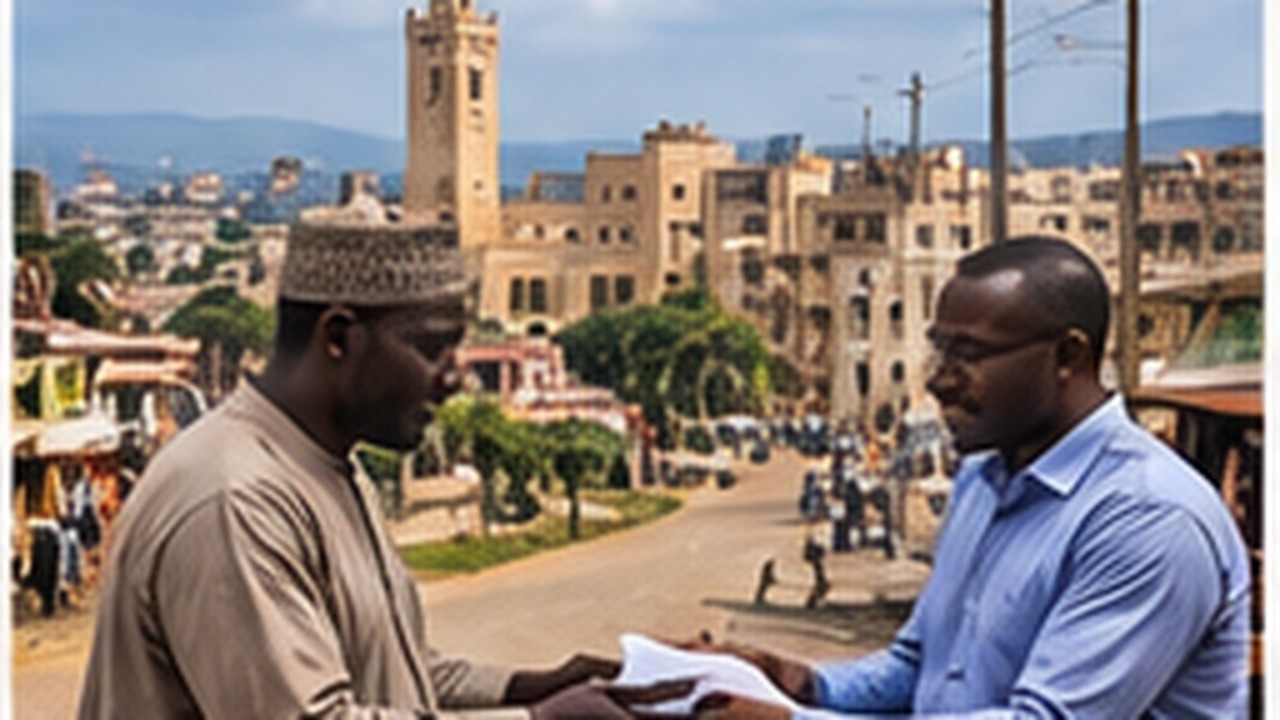
In Garoua, peer-to-peer lending mainly funds the farming season, livestock and small cross-border trade; often granted interest-free for religious reasons, it is legal when occasional and is best put in writing and paid in a traceable way.
Garoua, a river port on the Benue
Capital of the North Region, Garoua stretches along the bank of the Benue, close to the Lagdo dam. Fulfulde serves as the common trading language, and the economy rests on cotton, livestock, fishing and trade with neighbouring countries.
The cotton season and pre-harvest advances
SODECOTON, headquartered in Garoua, supervises a large share of the North's cotton growers. Between two seasons, planters borrow from a relative to feed the family; the deed should state whether repayment depends on payment for the harvest.
Funding farm inputs and equipment
A plough, draught oxen or a motor pump are often bought with money from a relative. To build a schedule that fits the dry and rainy seasons, see our page on peer-to-peer credit for farmers before agreeing any repayment dates.
Interest-free lending in a mainly Muslim city
A large part of the North's population is Muslim and favours the interest-free loan, the qard hassan. The principles of halal financing between individuals also recommend putting the debt in writing, with witnesses present at the signing.
Cattle, weekly markets and cash payments
Trade in cattle and small ruminants towards Nigeria is often settled in cash. A herder who advances animals or money to a drover should obtain a dated receipt stating the number of head, their value and the settlement date.
CFA franc, naira and trade with Chad
Trade with Nigeria involves the naira, while trade with Chad uses the same CFA franc issued by the BEAC. Always write the loan in CFA francs: a debt expressed in naira exposes both parties to sharp exchange-rate swings.
COBAC licensing and informal lenders
Traders in Garoua regularly advance money to farmers in return for part of the harvest. When this activity becomes habitual and paid, it amounts to credit reserved for banks and microfinance institutions licensed by COBAC, the regional banking supervisor.
Repayment in kind and hidden costs
Repaying 100,000 CFA francs with sacks of maize or groundnuts valued low at harvest time can hide a very high rate. Convert the value into money and compare the annual cost with the usury rate set each quarter by the BEAC.
Fake lenders targeting northern Cameroon
Ads circulating on Facebook and WhatsApp promise credit to farmers or traders in the North, then demand file-opening fees via mobile money. No genuine lender asks for a payment before the funds have been paid out.
Traditional chiefdoms and amicable settlement
In the North, traditional authorities, lamidos and neighbourhood chiefs, often act as mediators in debt disputes. An amicable settlement reached before them should be recorded in writing and signed, without giving up the right to go to court.
Court, lawyers and payment orders
If mediation fails, the creditor can apply for a payment order under the OHADA Uniform Act, the regional business law, before the competent court in Garoua. The acknowledgement of debt, receipts and written testimonies are then the decisive documents.
Reporting a scam from Garoua
A victim files a complaint at the police station or gendarmerie brigade, then alerts their mobile operator. Our guide on how to report a private loan scam lists the evidence to gather: screenshots, numbers, profile names and receipts.
Arranging a private loan in Garoua step by step
- State in writing whether the loan is interest-free, with interest or repayable in kind, and fix its value in CFA francs.
- Have the acknowledgement of debt signed by the parties and two witnesses, in French or translated into Fulfulde for the borrower.
- Set the due date around the sale of cotton, cattle or grain rather than an arbitrary month.
- Pay the money by mobile money or bank, or hand over cash against a signed receipt.
- Record each repayment, in money or in kind, on a countersigned schedule.
- Turn first to written traditional mediation, then to the court if the debt remains unpaid.
Cost benchmarks for a loan in Garoua
| Situation | Indicative cost | Point to watch |
|---|---|---|
| Qard hassan between relatives | No interest | Written record and witnesses recommended |
| Trader's advance against the harvest | Variable | Convert the value in kind into an annual rate |
| Loan with interest | Below the usury rate | Ceiling set each quarter by the BEAC |
| IRCM tax on interest received | 16.5% indicative | Check with the tax centre |
| File fees for a fake lender | Money lost | Never pay before the funds arrive |
Documents to prepare in the North Region
- National identity cards of the parties and witnesses
- Acknowledgement of debt stating the currency, the amount and the form of repayment
- Producer card, delivery book or growing contract for a farm loan
- Receipts for sales of cattle or grain used for repayment
- Written record of mediation in case of an amicable agreement
- Proof of mobile money or bank transfers
Common mistakes in Garoua
- Accepting repayment in sacks of grain without fixing their value in CFA francs, which hides an excessive cost.
- Denominating a debt in naira during trade with Nigeria and suffering a heavy exchange loss.
- Handing cash to a cattle drover without a receipt stating the number of head and the date.
- Paying file-opening fees to a page offering credit to cotton growers in the North.
- Settling for an oral agreement before the neighbourhood chief without a written record signed by both parties.
Questions about private lending in Garoua
Does an interest-free loan need to be in writing?
Yes, it is strongly advised. Even a qard hassan can be disputed by the borrower or their heirs. A dated document signed before witnesses, stating the amount and the due date, protects the relationship and makes any later claim easier.
Can a loan be repaid in cotton or cattle?
Nothing forbids it if both parties agree, but fix the value of each sack or animal in CFA francs in advance. Otherwise the lender may impose a low price and turn the loan into very expensive financing.
Does SODECOTON lend to private individuals?
The company organises the sector and supplies inputs to growers under its own rules, but it is not a peer-to-peer lender. For any advance, ask its services directly or check with your producers' group.
What if a lender demands fees before paying out?
Refuse: it is the sign of a scam. Never send a copy of your identity card or your mobile money code, keep the exchanges and report the number to your operator and to the Garoua police or gendarmerie.